
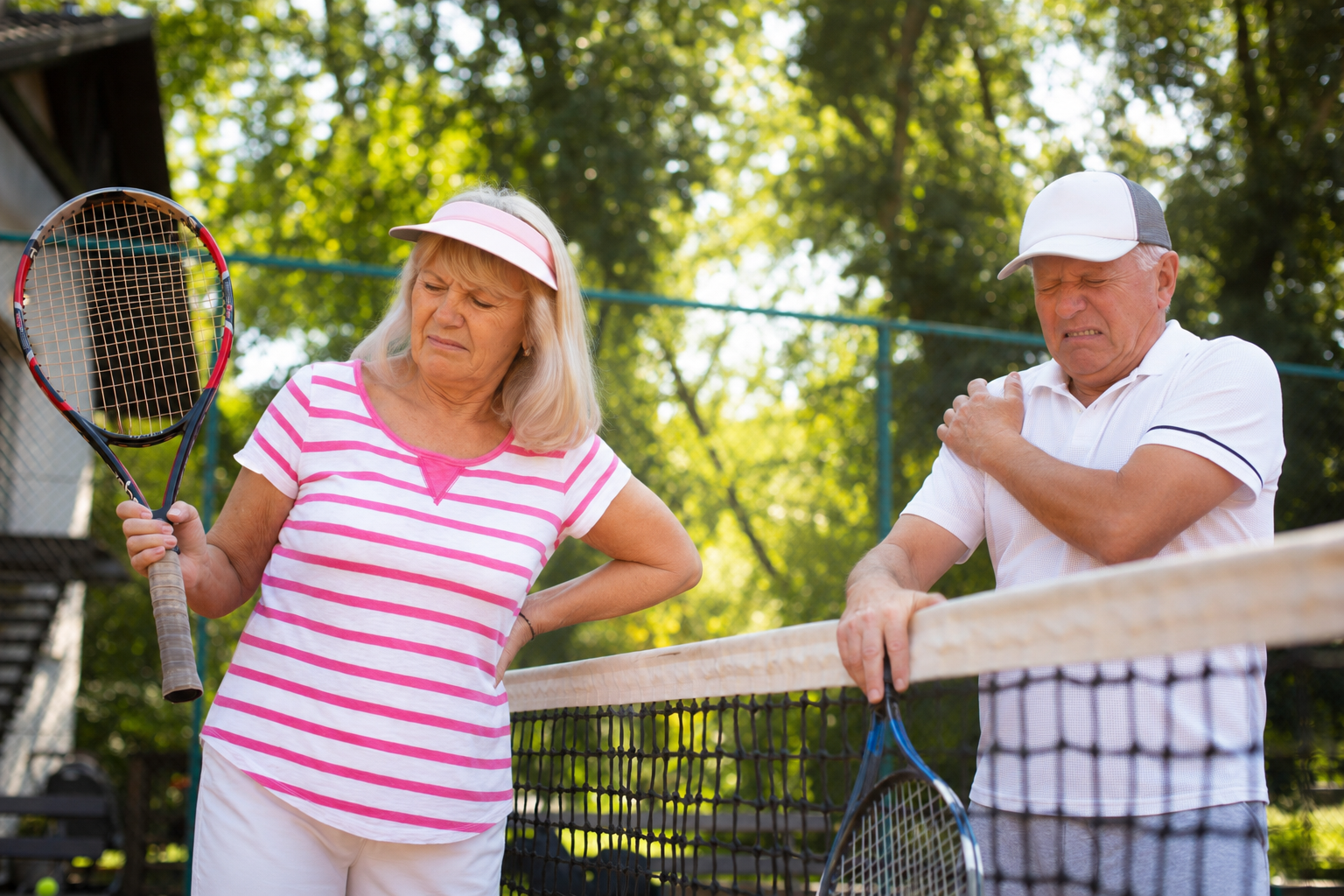
“Pickleball has become one of the fastest-growing sports in the country, and it’s also sending a surprising number of older adults to physical therapy for pickleball injuries. National data consistently shows the large majority happen to players over 50…
That’s not a coincidence, and it’s not really about the sport itself. It’s about what pickleball demands from a body that may not have been asked to move that way in years.
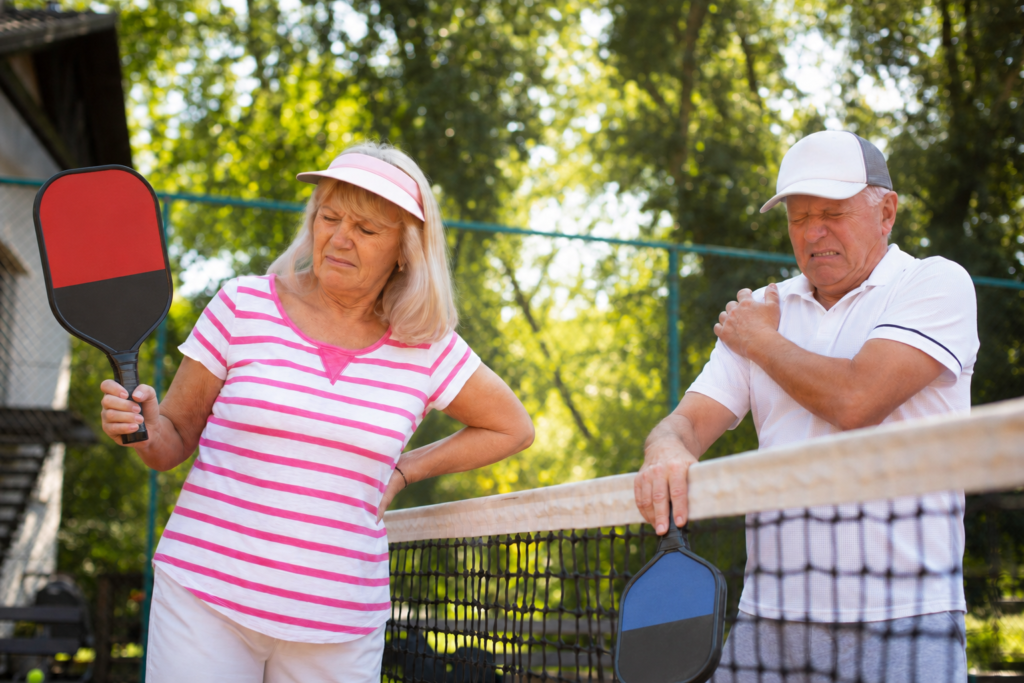
Why Pickleball Injuries Hit Older Adults Hardest
Pickleball looks gentle. In practice, it asks for sudden lateral direction changes, quick stop-and-start bursts, overhead reaching, and repetitive rotational movement — all packed into a small court where there’s very little time to react. For someone who’s been consistently active in ways that build that kind of quickness and control, that’s manageable. For someone returning to sport after years of a more sedentary routine, or managing the natural changes in joint stability, balance, and tissue elasticity that come with age, those same demands can easily exceed what the body is currently prepared for.
The most common result isn’t a dramatic injury from one bad play. It’s cumulative: an ankle that rolls because reaction time and balance haven’t been trained for quick direction changes, a rotator cuff that gets irritated from overhead volleys, a lower back that reacts to bending and twisting it hasn’t done in years.
The Problem With “Just Warm Up More” Advice
Most of what’s written about preventing pickleball injuries stops at generic advice: stretch beforehand, wear good shoes, build up intensity slowly. That’s not wrong, but it treats every player the same, when the actual risk factors are specific to each person — their current mobility, their balance, old injuries they’ve compensated around for years without realizing it, and how their body actually handles rotational and lateral load right now.
A generic warm-up doesn’t tell you whether your hips can handle the pivoting pickleball demands, or whether your shoulder is already compensating for a mobility restriction that’s about to become a real problem. That takes an actual assessment.
What We Actually Look At Before You Get Hurt (Or After You Already Have)
Whether you’re trying to prevent an injury or already dealing with one, the approach is the same: understand what your body can currently handle and where the gaps are relative to what pickleball demands. That typically includes:
- Balance and reactive movement control (the biggest factor in fall and ankle-injury risk)
- Hip and trunk rotational mobility for the sport’s constant pivoting
- Shoulder stability for overhead and volley motions
- Whether old injuries or years of reduced activity have created compensations that are quietly overloading a joint
From there, we build a plan specific to what your body needs — not a generic list of stretches, but targeted work on the actual gap between where you are and what the sport is asking of you.
You Don’t Have to Choose Between Pickleball and Staying Pain-Free
The goal isn’t to talk you out of a sport you love because it carries some risk — plenty of activities do. It’s making sure your body is actually prepared for what it’s being asked to do, so a fun weekend habit doesn’t turn into a nagging injury that sidelines you for months.
Book a Discovery Call — we’ll assess how your body is handling the demands of the game and build a plan to keep you on the court.
