
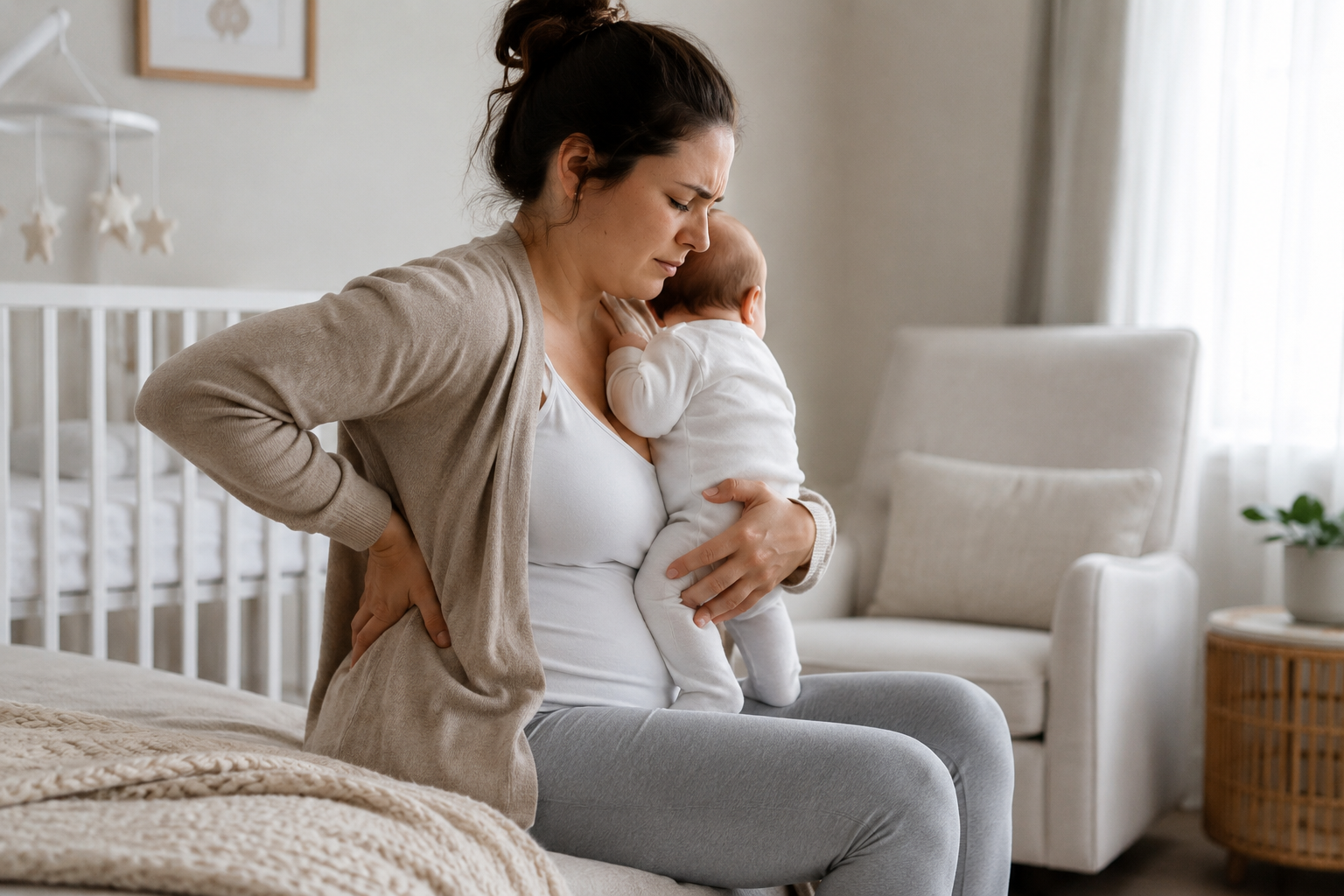
“If you’re dealing with postpartum back pain, you’ve probably been told it’s just part of having a baby. But that’s not the whole story.”
What’s Really Causing Your Postpartum Back Pain
Pregnancy and childbirth change your body in real, physical ways that don’t automatically reverse once the baby arrives. Hormonal shifts loosen the ligaments around your pelvis and spine to prepare for delivery, and those changes take time to resolve. Your core and pelvic floor muscles have been stretched and, in many cases, significantly weakened. Your posture has likely shifted from months of carrying weight differently, and it often continues shifting postpartum from carrying a car seat, bending over a crib, or breastfeeding for hours at a time.
None of that resolves just because time passes. Without the right kind of rehabilitation, the body tends to compensate around these changes rather than actually recover from them, which is exactly how a “temporary” postpartum ache turns into pain that’s still around a year later.
The Pain Points We See Most Often
- Lower back pain from a core that hasn’t regained the stability it had pre-pregnancy
- Hip pain from lingering ligament laxity combined with new movement patterns (carrying a baby on one hip, for example)
- Pelvic pain or pressure related to pelvic floor muscles that are either weakened or, just as often, overly tense and unable to relax properly
- Pain during activities you could do easily before — bending, lifting, even walking longer distances
Why Postpartum Back Pain Doesn’t Just Go Away
Time helps some things heal. It doesn’t retrain a core to stabilize your spine properly, and it doesn’t correct a pelvic floor that’s either too weak or too tight, those need targeted rehabilitation, not just patience. This is part of why pain can persist for years post-baby when it’s never actually been addressed directly.
What a Postpartum Evaluation Actually Involves
At Osteopractic Physical Therapy of Central Indiana, we look at the full picture of what’s changed: core and pelvic floor strength and coordination, hip and spine mobility, and the everyday movement patterns of caring for a baby that may be reinforcing the pain (how you’re lifting the car seat, how you’re positioned during feeding, how you’re carrying weight on one side). From there, treatment is built around retraining what’s actually not working, not a generic “core exercise” handout.
You Don’t Have to Just Live With This
If it’s been months (or longer) since you had your baby and you’re still dealing with pain that hasn’t improved, that’s not a sign you should have pushed through it more, or waited longer. It’s usually a sign that the underlying issue was never actually addressed.
Book a Discovery Call — we’ll talk through what’s going on and what a recovery plan built around your specific situation would look like.\
‘